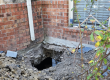

Crawl Space Repair Before After: Moisture Control Techniques
On a hot, humid Dallas afternoon, the last thing most property owners are thinking about is the dark space under their building. Yet in North Texas, where humidity routinely climbs above 70% and we see dramatic swings from drought to heavy rain, crawl spaces can quietly turn into moisture traps that damage structures from the ground up.
Across the Dallas–Fort Worth area, industry studies estimate that over 60% of crawl spaces show signs of elevated moisture—from mold staining to wood decay. Left untreated, that excess moisture can lead to sagging floors, musty odors, higher energy bills, and even structural failure.
This topic matters for Dallas businesses and property owners because our expansive clay soils, aging building stock, and frequent severe storms create a perfect storm for moisture intrusion. Addressing it early is far more cost-effective than repairing advanced structural damage later.
In this guide, you’ll see what effective “before and after” crawl space repair really looks like, how modern moisture control techniques work, and how a professional, local team approaches assessment, repair, and long-term protection.
Key Insight: Controlling moisture in your crawl space isn’t just about comfort or odor control; it’s a structural protection strategy that can extend the life of your building and reduce the need for major foundation repair services down the road.
Why Dallas Crawl Spaces Are So Vulnerable to Moisture Damage
Dallas sits on highly expansive clay soils that swell when wet and shrink when dry. Combine that with humid Gulf air and sudden storms, and crawl spaces become prime environments for persistent moisture issues.
How Moisture Gets In
Common entry points include:
- Ground moisture evaporating up into an open crawl space
- Poorly graded yards directing water toward the foundation
- Leaking or disconnected downspouts and gutters
- Unsealed crawl space vents and gaps in the rim joist
- Plumbing leaks that go unnoticed for months
We often see properties in older Dallas neighborhoods—like Oak Cliff, Lakewood, or parts of East Dallas—where original construction relied on passive venting and minimal ground cover. Over time, as landscaping changed and drainage shifted, those crawl spaces started accumulating moisture.
“We treated crawl spaces as ‘out of sight, out of mind’ for decades. Now we’re seeing the long-term consequences in sagging floors and compromised structures.” — Senior Structural Technician, Elite Foundation Repairs
Real-World Example
A small office building just north of downtown Dallas called our team because staff noticed a persistent musty smell and uneven floors. The crawl space was open to the soil with a few aging vents. Moisture readings were consistently above 80% relative humidity—more than enough to support mold growth and wood rot.
The “before” conditions included:
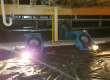
- Visible condensation on ductwork
- Mold staining on joists
- Soft, spongy areas in the subfloor
- Pooling water near one corner after every rain
Without addressing these issues, they were on track for major structural repairs. Moisture control became the first and most critical step in preventing more extensive sloping floor foundation repair and joist replacement work.
From Wet and Musty to Clean and Dry: Core Moisture Control Techniques
Effective crawl space repair in Dallas isn’t a single product or quick fix. It’s a system that starts with diagnosis and ends with long-term protection.
Step 1: Assessment and Moisture Mapping
Structural foundation repair specialists start with:
- Moisture meter readings in wood and air
- Visual inspection for mold, rot, and insect activity
- Checking floor deflection and framing integrity
- Evaluating drainage patterns around the building
For one South Dallas retail property, our inspection revealed that 40% of the floor framing showed early signs of moisture-related deterioration, but only one small corner had standing water. Without a full inspection, the owner might have only addressed that puddle and missed the bigger humidity problem.
Step 2: Ground Moisture Management
Bare soil in a crawl space constantly releases water vapor. One of the most effective techniques is installing a high-quality vapor barrier as part of comprehensive moisture control crawl space repair planning.
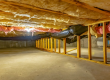
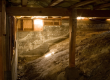
A typical “before” scene:
- Exposed dirt floor
- Old, torn plastic loosely laid down
- Debris and organic material everywhere
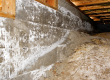
The “after” scene:
- Cleaned, graded surface
- Heavy-duty polyethylene vapor barrier sealed at seams
- Barrier mechanically fastened and sealed to piers and perimeter walls
This step alone can dramatically drop moisture levels, setting the stage for more advanced protection like encapsulation.
“Think of the vapor barrier as putting a lid on the ground moisture that’s been evaporating into your building for years.” — Project Manager, Elite Foundation Repairs
Step 3: Airflow and Ventilation Strategy
Traditional vented crawl spaces were designed on the assumption that outdoor air would “dry out” the space. In humid Dallas summers, the opposite happens: warm, moist air enters, cools under the building, and drops its moisture on cooler surfaces.
Modern strategies include:
- Sealing old vents as part of full crawl space sealing and insulation
- Installing controlled mechanical ventilation or dehumidification
- Integrating with broader foundation ventilation planning to avoid air quality issues
Encapsulation vs. Traditional Venting: Before-and-After Impact
One of the biggest shifts in crawl space repair over the past decade is the move from traditional vented designs to fully encapsulated systems. Business owners often ask how these approaches compare in real-world Dallas conditions.
Comparison: Traditional Vented vs. Modern Encapsulated Crawl Space
| Feature / Factor | Traditional Vented Crawl Space | Modern Encapsulated Crawl Space |
|---|---|---|
| Ground Cover | Minimal or loose plastic, often damaged | Continuous vapor barrier sealed to walls and piers |
| Vents | Open to outside air year-round | Vents sealed; controlled air exchange or dehumidifier used |
| Humidity Levels (Typical in Dallas) | 70–90% in summer | 45–60% maintained year-round |
| Mold & Odor Risk | High, especially after storms | Significantly reduced with proper design |
| Energy Efficiency | Lower; ducts and floors exposed to humid air | Higher; conditioned air loss reduced |
| Upfront Cost | Lower initial cost | Higher initial investment |
| Long-Term Structural Protection | Limited; ongoing risk of rot and sagging floors | Strong; protects framing and subfloor from chronic moisture |
| Typical Use Case | Short-term fix, minimal budget | Long-term solution for commercial and residential properties |
Dallas Case Study: Retail Space Encapsulation
A neighborhood retail space in East Dallas was experiencing musty odors that customers noticed immediately when walking in. The crawl space had open vents and a patchwork of old plastic on the ground.
After a full assessment, the owner chose a modern encapsulation approach, including:
- Complete cleanup and debris removal
- Installation of a sealed vapor barrier
- Sealing vents and rim joists
- Adding a dedicated crawl space dehumidifier
- Minor structural foundation repair specialists work on a few weakened joists
Six months later, the “after” results included:
- Stable humidity readings around 50%
- No musty odor complaints
- Noticeably more stable indoor temperatures
- Reduced risk of future structural damage
For many Dallas properties—especially those with higher-value tenants or sensitive inventory—encapsulation offers peace of mind and a strong return on investment.
Integrating Drainage and Retaining Walls for Long-Term Protection
Moisture control in a crawl space doesn’t stop at the foundation wall. What happens outside your building often determines whether your repairs will last.
Why Exterior Drainage Matters
Our clay soils can hold a tremendous amount of water. After a heavy North Texas rain, that soil swells and pushes against your foundation. If water is allowed to collect along the perimeter, it can seep into the crawl space and undermine even the best vapor barrier.
A comprehensive plan often includes:
- Regrading soil to slope away from the building
- Extending downspouts 5–10 feet from the foundation
- Installing French drains or surface drains
- Evaluating the need for drainage correction to redirect runoff
Role of Retaining Walls
In sloped lots—common in areas like North Oak Cliff or around White Rock Lake—water naturally runs toward the lowest point. Properly designed retaining walls can redirect that flow and reduce pressure on your foundation.
A local restaurant built on a gentle slope in North Dallas had recurring water intrusion under its dining area. Our team designed a solution that combined:
- New surface drains and grading
- A small but strategic retaining wall installation services project
- Crawl space encapsulation and humidity control
The “before” scenario included frequent puddling under the building and seasonal floor movement. The “after” picture showed a dry, stable crawl space and fewer seasonal complaints about doors sticking or floors shifting.
“Exterior drainage and retaining walls aren’t cosmetic. They’re critical components of a complete moisture management strategy.” — Lead Designer, Elite Foundation Repairs
Structural Repairs: Fixing What Moisture Has Already Damaged
By the time many Dallas property owners call a professional crawl space repair contractor, some structural damage has already occurred. Moisture and time are a tough combination for wood framing and masonry.
Common Moisture-Related Structural Issues
- Sagging or sloping floors from weakened joists or beams
- Cracked piers or shifting supports
- Soft or deteriorating subflooring
- Cracks in foundation walls or stem walls
In some cases, these issues require coordinated work between a residential foundation repair contractor and a crawl space structural repair company to ensure the entire system is stable.
Before-and-After Example: Office Building with Sloping Floors
A professional services office in a 1960s building near Preston Road reported that interior doors wouldn’t stay closed and file cabinets leaned noticeably.
Inspection revealed:
- Several joists compromised by long-term moisture exposure
- Inadequate support spacing under heavy partition walls
- High humidity and minor mold growth
The repair sequence:
1. Temporary shoring installed to protect occupants
2. Damaged joists sistered or replaced
3. Additional piers added for better load distribution
4. Subfloor repairs where necessary
5. Moisture control system installed (vapor barrier + ventilation improvements)
The “after” results:
- Floors leveled and stabilized
- Doors operated properly again
- Structural integrity restored, backed by a repair warranty
This kind of structural work is often done alongside moisture control to avoid a cycle where newly repaired framing is exposed to the same damaging conditions.
“Moisture control protects your investment in structural repairs—without it, you’re just hitting reset on the same problem.” — Structural Engineer, Elite Foundation Repairs
Modern Encapsulation Systems: What a Complete Solution Looks Like
For many Dallas buildings, especially those with long-term occupancy plans, a full encapsulation system offers the most comprehensive protection. It’s more than just rolling out plastic; it’s an engineered approach.
Components of a Quality Encapsulation System
A well-designed system typically includes:
- Heavy-duty vapor barrier fully sealed and mechanically attached
- Sealed vents and rim joist insulation where appropriate
- Air sealing around penetrations and access points
- A dedicated dehumidifier or controlled ventilation system
- Sump pump or interior drainage if groundwater is an issue
When done by a professional crawl space encapsulation contractor, these components work as a coordinated system, not isolated products.
Encapsulation vs. Partial Measures: Cost and Benefit
| Approach | Approximate Cost (Dallas Market) | Typical Benefits | Typical Risks / Limits |
|---|---|---|---|
| Basic Vapor Barrier Only | Low to Moderate | Reduces ground moisture, easy to install | Doesn’t address humidity from outside air |
| Vapor Barrier + Drainage Fixes | Moderate | Better control of standing water and runoff | Still vulnerable to humid outdoor air |
| Full Encapsulation + Dehumidifier | Higher | Comprehensive moisture control, best protection | Higher upfront cost, requires professional install |
\Actual costs vary by size, access, and existing damage, but this gives a relative comparison for Dallas-area projects.
A property owner in Richardson chose full vapor barrier crawl space encapsulation after years of piecemeal fixes. Their “before” included:
- Multiple spot repairs for wood rot
- Occasional mold remediation
- Ongoing odor complaints
The “after” with a full system:
- Stable humidity levels
- No new mold growth
- Reduced need for ongoing repairs
- Improved indoor air quality for tenants
What This Means for Businesses in Dallas, Texas
For businesses and property owners in Dallas, crawl space conditions aren’t just a hidden construction detail—they’re a risk factor that affects revenue, liability, and long-term asset value.
Local regulations and tenant expectations are increasingly focused on indoor air quality and building health. A musty-smelling office or retail space can drive customers away, impact employee comfort, and even raise questions about health and safety.
Dallas’ unique combination of:
- Expansive clay soils
- High humidity
- Aging commercial building stock
- Intense weather events
makes proactive moisture control especially important. Ignoring crawl space issues can lead to:
- Costly concrete foundation crack repair and structural remediation
- Business interruption during major repairs
- Difficulty attracting or retaining high-quality tenants
- Lower property valuations during sale or refinancing
On the other hand, businesses that invest in modern crawl space repair services and moisture management benefit from:
- More stable, level floors and fewer structural surprises
- Better indoor air quality and fewer odor complaints
- Reduced risk of mold-related issues
- Stronger negotiating position with buyers, tenants, and insurers
For many Dallas properties, crawl space repair is one of those behind-the-scenes investments that never makes the marketing brochure—but quietly protects every other improvement you make to your building.
Frequently Asked Questions
Q: How do I know if my Dallas building actually needs crawl space moisture control?
A: Common warning signs include musty odors, uneven or bouncy floors, visible mold around baseboards, higher-than-normal humidity indoors, or rusting metal components in the crawl space. If you’ve had repeated plumbing leaks, poor drainage, or prior foundation repair services, it’s wise to have the crawl space inspected. A local foundation repair expert will use moisture meters and visual inspection to determine whether you need basic clean-up, targeted repairs, or a more comprehensive encapsulation system. In Dallas, even relatively “dry” crawl spaces can experience seasonal humidity spikes that justify preventive measures.
Q: Is full crawl space encapsulation always necessary, or are there more budget-friendly options?
A: Encapsulation is the gold standard for long-term protection, but it’s not the only option. For some Dallas properties, especially smaller buildings or those with mild issues, targeted measures—such as a properly installed vapor barrier, basic drainage correction, and selective vent sealing—may be sufficient. A professional crawl space repair contractor will typically present a range of options, from essential repairs to comprehensive systems, along with pros, cons, and cost differences. The right choice depends on your building’s condition, risk tolerance, and how long you plan to own or occupy the property.
Q: How does crawl space moisture relate to foundation cracks and structural damage?
A: Elevated moisture in a crawl space accelerates wood rot, invites termites, and can cause differential movement in piers and beams. Over time, this leads to sloping floors, gaps at baseboards, and even cracks in walls and masonry. In some cases, excess moisture contributes to conditions requiring basement and foundation crack sealing or more extensive structural work. By controlling humidity and water intrusion under the building, you reduce stress on the foundation system and help prevent the need for more invasive structural crack repair solutions later.
Q: How long does a typical crawl space repair and encapsulation project take in the Dallas area?
A: Most commercial and residential crawl space restoration projects can be completed in a few days to a week, depending on size, access, and existing damage. Simple moisture control upgrades with a vapor barrier and minor drainage adjustments may be finished in 2–3 days. More complex jobs that include structural repairs, such as joist replacement or sloping floor foundation repair, can take longer. Weather can also play a role, especially if exterior drainage work or retaining wall installation is involved. A reputable contractor will provide a detailed schedule so you can plan around business operations.
Q: Will crawl space encapsulation increase my energy efficiency or lower utility bills?
A: In many Dallas buildings, yes. When you install a properly sealed vapor barrier, close off vents, and manage humidity, you reduce the amount of unconditioned, humid air entering your building envelope. This helps HVAC systems work more efficiently and often reduces energy loss through the floor. Businesses with ductwork in the crawl space see some of the biggest benefits, as encapsulation reduces condensation and temperature swings around those ducts. While energy savings alone may not justify the entire cost, they are a meaningful side benefit to improved comfort and structural protection.
Q: How do retaining walls and drainage tie into my crawl space repair plan?
A: Crawl space moisture problems often originate outside the building. Poor grading, inadequate gutters, and sloped lots can direct water toward your foundation. In some Dallas properties, strategic retaining wall installation services and surface drainage improvements are essential to keep water away from the crawl space. Without addressing these exterior factors, even the best interior moisture control system can be overwhelmed during heavy storms. A local foundation repair expert should evaluate both interior and exterior conditions and design a coordinated plan that may include drains, grading, and retaining walls.
Q: How often should a repaired or encapsulated crawl space be inspected?
A: After a major crawl space repair or encapsulation, an annual or biannual inspection is a good practice, especially in the first few years. Technicians will check the condition of the vapor barrier, verify humidity levels, inspect for any new cracks or settlement, and ensure that drainage systems and dehumidifiers are functioning properly. In Dallas, where weather extremes can stress building systems, periodic inspections help you catch small issues—like a disconnected downspout or minor leak—before they compromise your moisture control investment or lead to more serious foundation crack repair services.
Ready to Get Started?
Moisture problems in your crawl space won’t resolve themselves, and in a climate like Dallas, they almost always get worse with time. Each season of high humidity, heavy rain, and soil movement adds stress to your foundation, framing, and flooring. Addressing issues now can mean the difference between manageable repairs and disruptive, costly structural work later.
If you’ve noticed musty odors, uneven floors, or signs of water under your building, this is the ideal time to schedule a professional assessment. Elite Foundation Repairs will evaluate your crawl space, drainage, and structural conditions, then recommend a tailored plan—from basic moisture control to full encapsulation and structural stabilization.
Our team works around your business schedule, keeps you informed at every step, and backs our work with strong warranties. Protect your building, your tenants, and your long-term investment by partnering with local experts who understand Dallas soils, weather, and construction.
About Elite Foundation Repairs
Elite Foundation Repairs is a locally owned structural and crawl space structural repair company serving Dallas and the surrounding North Texas communities. With years of experience in expansive clay soils, complex drainage conditions, and both residential and commercial structures, our team combines engineering-based solutions with hands-on craftsmanship. From crawl space encapsulation and drainage correction to retaining walls and structural foundation repair, we focus on long-term stability, clear communication, and honest, data-driven recommendations.