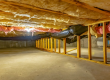

Crawl Space Encapsulation: Seal, Ventilate, Protect
You notice it first as a smell—damp, earthy, and stubbornly present even after you’ve run the A/C. Then you spot the warning signs under the home: condensation on ductwork, a dark patch along the rim joist, or insulation that’s holding moisture instead of keeping the house comfortable. In Dallas and the North Texas area, this isn’t just an indoor air-quality issue. When crawl spaces stay wet and humid, moisture can quietly accelerate wood decay, rust ductwork, and worsen structural movement over time.
One homeowner we worked with described it this way: “The floors feel mostly level, but every summer the musty smell comes back and my utility bills jump.” When we opened the crawl space, the insulation was damp, the soil was emitting moisture vapor, and the air movement wasn’t controlled—meaning the crawl space was acting like a humid reservoir under the home.
Crawl space encapsulation—properly sealing, controlling moisture, and using the right ventilation approach—can be a turning point. But it only works when it’s done correctly for the way your home and yard manage water.
Quick Answer
Crawl space encapsulation is a moisture-control system that typically includes:
- Sealing openings and penetrations to stop humid air and vapor from entering
- Installing a properly rated vapor barrier on the crawl space floor
- Addressing ventilation and/or mechanical dehumidification based on your crawl space conditions
- Improving drainage and grading so water isn’t constantly feeding moisture
In practice, the best results come from combining encapsulation with the right water management—especially around gutters, downspouts, and exterior drainage.
What We Commonly See in North Texas Homes
In Dallas-area neighborhoods, we often run into crawl spaces that look “fine” from the exterior—no obvious standing water, no dramatic foundation cracks—yet the crawl space tells a different story. Common patterns include:
- Expansive clay soils that expand and contract with seasonal moisture shifts, increasing the likelihood of small settlement or movement.
- Heavy rain cycles followed by rapid drying, which can drive moisture vapor into the crawl space through the soil.
- Gaps at rim joists and penetrations (pipes, wiring, ductwork) that allow humid outdoor air to circulate inside.
- Inconsistent grading or downspout discharge that keeps water near the foundation perimeter.
A firsthand contractor observation
The most telling detail is often what’s happening at the perimeter. In many crawl spaces, we see vapor barrier seams that are intact in the middle of the floor—but the system fails at the edges where the barrier meets piers, foundation walls, and penetrations. That’s where moisture sneaks in, condenses, and then keeps wood damp.
If the goal is long-term protection, encapsulation has to be continuous and detailed—not just “covered with plastic.”
How Crawl Space Encapsulation Actually Works
Think of the crawl space like the “humidity buffer” under your home. Without control, moisture moves into the crawl space through:
- Soil evaporation (water vapor rising from the crawl space earth)
- Outdoor air infiltration (leaks and openings that bring in humid air)
- Condensation (warm, humid air contacting cooler surfaces like ductwork and foundation elements)
Encapsulation aims to interrupt those pathways by creating a controlled environment:
1. Vapor barrier on the crawl space floor reduces soil vapor transfer.
2. Sealing wall penetrations and openings limits humid air infiltration.
3. Ventilation approach is chosen based on humidity conditions and local climate behavior.
4. Moisture control (often including dehumidification when appropriate) keeps humidity in a safe range.
Common Mistakes Homeowners Make
1) Treating encapsulation like a DIY plastic cover
A common mistake is installing a vapor barrier without sealing edges, penetrations, and seams. Even a well-installed sheet can underperform if the perimeter isn’t detailed. Moisture will follow the path of least resistance—usually at the foundation wall interface.
2) Ignoring drainage and grading
If downspouts dump near the foundation or landscaping traps water, encapsulation can’t fully compensate. You may reduce vapor from the soil, but bulk water still creates wet conditions that drive humidity and deterioration.
3) Choosing the wrong ventilation approach
Some homeowners (or contractors) assume “more ventilation is always better.” In humid climates, uncontrolled ventilation can keep feeding moisture into the crawl space. In other situations, sealed systems may need a dehumidification plan. The right answer depends on your crawl space’s existing moisture behavior.
4) Overlooking structural moisture links
Wood rot, rust, and poor ventilation don’t just affect comfort—they can impact components that support the structure. When moisture is persistent, the crawl space becomes a cycle: wet wood weakens, and the home’s ability to handle minor movement declines.
Inspection & Prevention Checklist (What We Look For)
Before recommending encapsulation, we inspect the crawl space like a system—moisture source, pathways, and the home’s structural context. Here’s a practical checklist homeowners can use to understand what should be evaluated:
Crawl Space Moisture Checklist
- Odors and visible condensation: Is there dampness on ductwork, piers, or the underside of floor framing?
- Vapor barrier condition (if present): Are there tears, missing sections, or unsealed seams?
- Perimeter gaps: Any open penetrations around pipes, wiring, or rim joists?
- Ductwork condition: Any corrosion or insulation that’s damp?
- Evidence of standing water or active seepage: Damp soil patches, wet foundation areas, or water trails after rain.
- Humidity indicators: Musty smell, damp insulation, or recurring condensation during humid seasons.
- Exterior water management: Downspouts, gutter runoff, grading, and signs of water pooling near the foundation.
Prevention that matters right away
- Keep gutters and downspouts discharging away from the foundation perimeter.
- Avoid landscaping that creates “moisture bowls” near crawl space vents or access points.
- Don’t cover damp insulation with more insulation—address moisture first.
If your crawl space is showing persistent dampness, encapsulation should be paired with moisture source control, including drainage correction where needed.
Quick Comparison: Ventilate vs. Encapsulate (What’s Best?)
Every crawl space is different, but this comparison reflects common decision points we see in North Texas homes:
| Approach | Best When | Common Risk |
|---|---|---|
| Traditional ventilation (vents open year-round) | Dry crawl spaces with excellent exterior grading | Can introduce humid outdoor air and keep humidity high |
| Full encapsulation with vapor barrier | Crawl spaces with soil vapor issues, condensation, and infiltration | If perimeter sealing/drainage is poor, moisture still finds entry points |
| Encapsulation + dehumidification | Humidity remains elevated even after sealing | Requires correct sizing and ongoing monitoring |
Dallas / North Texas Relevance: Why Moisture Control Matters Here
Dallas-area weather patterns create a tough environment for crawl spaces. The region’s expansive clay soil holds moisture during wet periods and then changes as conditions dry and temperatures swing. That movement can contribute to small shifts in piers, supports, and foundation elements. Meanwhile, the crawl space humidity cycle can keep wood and metal components in a “wet for long periods” state.
In our experience, this combination is what often makes crawl space problems feel recurring:
- Rainfall increases moisture content in the soil and around foundations.
- Humid air infiltrates through gaps.
- Condensation forms when crawl space surfaces cool at night.
- Materials stay damp long enough to deteriorate and amplify structural concerns.
This is also why encapsulation discussions should naturally connect to your foundation performance. If you’re seeing cracks or uneven floors, moisture control and foundation repair services may need to be part of the same plan.
A Realistic Repair Case (Anonymized Example)
A homeowner in the Dallas area reported recurring musty odor and rising humidity during summer. They also mentioned small gaps appearing around a doorway and slight floor unevenness—nothing dramatic, but persistent.
What we found:
- A crawl space with a partially installed vapor barrier that wasn’t sealed at the perimeter.
- Noticeable moisture on ductwork insulation.
- Several penetrations where humid air could move freely between outdoors and the crawl space.
- Downspout discharge that consistently routed water toward the foundation perimeter.
What we recommended:
- Full crawl space sealing and vapor barrier replacement with detailed perimeter sealing.
- Corrected water discharge and grading adjustments to reduce moisture input.
- A ventilation/dehumidification strategy based on measured humidity behavior, not assumptions.
Outcome:
- The musty odor diminished quickly after the moisture pathway was controlled.
- The crawl space stayed noticeably drier through the next humid stretch.
- The homeowner also avoided “band-aid” insulation changes because the moisture issue was addressed first.
What Actually Causes Ongoing Movement (Moisture + Structure)
Homeowners often focus only on visible foundation cracks, but moisture can be the driver that keeps problems active. Persistent crawl space dampness can:
- Accelerate wood decay in subfloor components and supports
- Increase corrosion risk for metal components and ductwork
- Create a cycle of humidity and condensation that keeps materials stressed
- Contribute to soil moisture changes that affect foundation stability
If your foundation is already experiencing movement, encapsulation becomes even more valuable as part of a long-term stabilization approach. If you’ve got signs of structural concerns, consider reviewing sloping floor foundation repair alongside moisture control.
Inspection & Prevention Checklist (For Your Next 30 Days)
If you want to be proactive before a professional inspection, here’s a practical starting point:
- Check downspouts: Do they discharge at least several feet away from the foundation (and into a proper drainage pathway)?
- Look for pooling: After a heavy rain, walk the perimeter and note where water lingers.
- Inspect crawl space vents/access points: Are there gaps or openings that bring in humid air?
- Feel the air: If the crawl space air feels damp or musty, assume vapor control is needed.
- Photograph problem areas: Rim joists, penetrations, and any condensation help during scheduling and planning.
Foundation Repair vs. Monitoring: When Encapsulation Is Enough
Encapsulation is primarily a moisture-control solution. It can protect structural components and improve indoor air quality, but it doesn’t replace structural stabilization if your foundation is actively moving.
A simple decision guide
- Encapsulation-first is often appropriate when the main issues are dampness, condensation, odor, and deteriorating crawl space materials—without clear evidence of ongoing structural movement.
- Foundation repair planning is needed when you have signs of movement such as:
- widening cracks that progress over time
- doors/windows that don’t align seasonally
- persistent sloping, sagging, or uneven floors
- signs of settlement tied to drainage problems
If you’re seeing structural symptoms, we typically coordinate moisture control with structural evaluation—because long-term success depends on addressing both.
Industry References (Why Moisture Control Is a Big Deal)
- The U.S. Environmental Protection Agency (EPA) highlights moisture management as a key factor in preventing mold and improving indoor air quality, and crawl spaces are a common moisture source when not controlled.
- Building science organizations consistently emphasize that controlling moisture at the source (including vapor barriers and air sealing) is more effective than relying on ventilation alone in many humid climates.
- The American Society of Heating, Refrigerating and Air-Conditioning Engineers (ASHRAE) discusses the importance of controlling indoor humidity and moisture to prevent biological growth and material damage—principles that apply directly to crawl space environments.
(Your exact approach should still be based on inspection results and measured conditions.)
Ready to Protect Your Foundation or Crawl Space?
If you’re dealing with damp smells, condensation, or recurring humidity under your home, crawl space encapsulation can be a strong long-term solution—especially when it’s paired with correct water management. The goal isn’t just to “cover the crawl space,” but to stop moisture from repeatedly feeding the same problems.
About Elite Foundation Repairs
Elite Foundation Repairs provides foundation repair, crawl space repair, retaining wall construction, drainage correction, and structural stabilization services throughout Dallas, TX and surrounding North Texas communities. The company focuses on long-term structural solutions, moisture management, accurate inspections, and helping homeowners protect their properties from foundation movement caused by regional soil and drainage conditions.
If you’d like, tell me what you’re seeing (odor, condensation, cracks, humidity, standing water, etc.) and whether you have a crawl space access—I’ll suggest what to check before your inspection.