
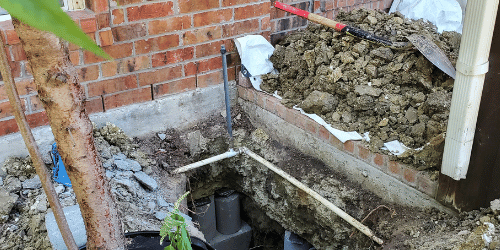
Foundation Crack Repair With Epoxy Solutions for Real Homes
A homeowner in Dallas recently called after noticing a crack that seemed to “wake up” every summer. It started as a hairline line near a window, but within a few months it widened just enough to catch a fingernail. The home also had a musty smell in the hallway during humid weeks—nothing dramatic, but consistent.
That combination—visible cracking plus recurring moisture—often means the foundation isn’t just “aging,” it’s responding to movement and water pressure in cycles. In North Texas, those cycles are common because expansive clay soils expand and contract with drought and heavy rain. When water gets into the wrong places, it can keep cracks open long after the weather changes.
Epoxy foundation crack repair can be a smart solution for the right kind of crack, in the right conditions. But it’s not a one-size-fits-all fix, and homeowners deserve to understand where epoxy helps and where it won’t.
Quick Answer
Epoxy foundation crack repair is often used to seal and stabilize non-moving or slowly moving concrete cracks by restoring a tight, water-resistant barrier. Before epoxy is applied, a reputable professional should evaluate whether the crack is active (still widening) and whether moisture/drainage issues are driving the problem. If the crack is caused by pressure from water, poor grading, or failed drainage, sealing alone usually doesn’t hold.
When Epoxy Works (and When It Doesn’t)
Epoxy is designed to do two main things for concrete cracks:
1. Seal the crack to reduce water infiltration and dampness.
2. Bond and restore integrity by filling voids with a strong, adhesive material.
In the field, we look for indicators that the crack is primarily water-related and not actively shifting. Epoxy tends to perform best when:
- the crack width is relatively consistent (or only slightly changes)
- the surrounding concrete is not showing signs of new displacement
- the crack pattern suggests shrinkage or minor movement rather than ongoing structural failure
- moisture sources around the home are identified and corrected (grading, downspouts, drainage)
Firsthand contractor observation
On many Dallas-area slabs and basements, the “crack that keeps coming back” isn’t actually the crack returning—it’s the water pattern returning. I’ve seen homes where epoxy was applied cosmetically to a basement wall crack, but the surrounding area continued to stay wet because exterior drainage wasn’t corrected. The crack stayed sealed briefly, then moisture found alternate paths, and the homeowner started noticing efflorescence and damp drywall again.
That’s why we treat epoxy as part of a bigger system—not the whole strategy.
What Homeowners Often Ignore
Most homeowners understandably focus on the crack itself. But cracks are frequently a symptom. A few patterns we commonly see in real homes:
- Cracks near window openings that align with water runoff paths after storms
- Hairline cracks that grow after heavy rain (often a sign water pressure is involved)
- Cracks that feel damp to the touch or have a musty odor nearby
- Cracks paired with drywall bubbling or recurring basement humidity
Common Mistakes That Make Foundation Problems Worse
1) Sealing without diagnosing movement
Homeowners sometimes assume “a crack is a crack.” But structural stabilization depends on whether the concrete is still moving. If a crack is active, epoxy can fill it temporarily—then the next movement breaks the bond.
2) Ignoring the water source
Epoxy can help block water through the crack, but it doesn’t correct:
- poor grading that directs runoff toward the foundation
- clogged gutters/downspouts
- missing or failing drainage systems
- high groundwater conditions in basements/crawl spaces
If water pressure keeps loading the wall or slab, the crack will keep fighting the seal.
3) Rushing the prep work
Concrete crack repair lives or dies on surface prep: cleaning, opening the crack correctly (where needed), and ensuring the substrate is ready for bonding. Skipping prep is one of the fastest routes to early failure.
4) Treating basement moisture like a “separate issue”
In many North Texas homes, moisture intrusion and foundation movement are linked. When water gets under slab edges, behind basement walls, or into crawl space soil, it can increase hydrostatic pressure and contribute to settlement behavior over time.
Signs Your Foundation May Be Moving
Epoxy is more effective when cracks are stable or changes are minor. Watch for signs that suggest movement is ongoing:
- crack width increases seasonally (especially after wet cycles)
- stair-step cracking in masonry or widening at mortar joints
- gaps around doors/windows that weren’t there before
- uneven floors that get worse over time
- dampness, efflorescence, or persistent humidity near the crack line
- cracks that “branch out” into new sections
If you’re seeing those patterns, a structural evaluation should come before any sealing.
Inspection & Prevention Checklist (Before Any Epoxy Is Applied)
Here’s the checklist we use as a practical starting point for homeowners and for our own job planning. It doesn’t replace a professional inspection, but it helps you catch the right information early:
Crack and structure basics
- Measure the crack width at multiple points (use a ruler or caliper)
- Photograph the crack in the same lighting/angle every 2–4 weeks
- Note whether it changes after storms or during temperature extremes
- Check for nearby displacement: doors sticking, drywall separation, misaligned trim
Moisture and drainage indicators
- Look for water pooling within 6–10 feet of the foundation after rain
- Inspect downspouts: do they discharge near the home or splash-back toward walls?
- Check for damp drywall or musty odors near the crack
- Look for soil that stays unusually wet compared to surrounding areas
- Confirm whether gutters are functioning properly and not overflowing
Crawl space and basement conditions (if applicable)
- Inspect for standing water, damp insulation, or high humidity
- Check whether the crawl space has adequate ventilation and effective moisture control
- Identify visible signs of vapor intrusion: condensation on surfaces, organic growth, or saturated soil
If you’re dealing with crawl space moisture alongside cracks, you may also want to review foundation ventilation solutions and drainage correction, since moisture pathways often overlap.
An Anonymized Repair Case: Epoxy Crack Repair With a Drainage Fix
A Dallas homeowner noticed a basement wall crack running vertically near a corner. The crack was about 1/16″ and seemed stable for a few weeks, but it widened slightly after heavy storms. The basement also had persistent dampness along the same wall.
What we observed during inspection:
- the crack coincided with a downspout discharge area that splashed toward the exterior foundation
- the wall showed signs of moisture migration (darkening and minor mineral staining)
- the surrounding concrete didn’t show major displacement, suggesting the crack could be sealed effectively if water pressure was reduced
Our approach:
1. Corrected exterior water management (downspout routing and surface drainage improvements)
2. Prepared the crack properly for bonding
3. Applied epoxy foundation crack repair to seal the crack and reduce future infiltration
Outcome (typical for this scenario):
- after the drainage corrections, the crack stopped “reacting” to storms
- interior dampness reduced noticeably
- the epoxy remained intact because the underlying moisture drivers were addressed
This is the key difference between crack sealing that lasts and crack sealing that only looks good for a season.
Dallas / North Texas Relevance: Why This Happens Here
North Texas soil behavior is a major reason cracks don’t always behave the way people expect. Our region often experiences:
- expansive clay soil that expands during wet periods and contracts during drought
- rapid swings in temperature that stress concrete and masonry
- heavy rain cycles that can overwhelm gutters, grading, and drainage swales
In many Dallas-area homes, foundation stress isn’t caused by one event—it’s caused by repeated moisture loading. The crack becomes a predictable entry point for water, and water becomes a predictable contributor to movement.
That’s why we focus on both the structural crack and the conditions around it, including moisture control and drainage improvements.
If you’re also dealing with nearby retaining walls or grade changes, it’s worth considering retaining wall repair and installation services because wall drainage and backfill behavior can influence how water flows across a property.
Foundation Repair vs. Monitoring: A Practical Comparison
| Situation | Epoxy Crack Repair May Help | Why |
|---|---|---|
| Crack is stable and mostly cosmetic/water-related | ✅ Often | Sealing reduces moisture intrusion and helps prevent deterioration |
| Crack widens seasonally or shows displacement | ❌ Not by itself | Active movement requires structural stabilization and moisture/drainage fixes |
| Crack is caused by ongoing water pressure | ⚠️ Sometimes, with drainage correction | Epoxy works best when water drivers are controlled |
| Multiple cracks + uneven floors/settlement | ❌ Usually | Indicates broader structural movement; sealing alone won’t address stability |
If you’re unsure whether your crack is active, a careful inspection—including tracking width changes—usually clarifies the right path.
Key Recommendation: Pair Epoxy With Moisture Control
The most successful crack repairs we see aren’t just about filling a line in concrete. They’re about preventing recurring moisture and pressure that keep the foundation reacting.
Depending on what we find, that may include:
- correcting runoff and drainage improvement services
- addressing crawl space moisture with residential foundation repair contractor-level stabilization and sealing planning
- using crawl space encapsulation and vapor barrier strategies where applicable
- ensuring crawl space repair and moisture control are aligned with the rest of the foundation system
Moisture control isn’t a “bonus.” It’s part of structural stability.
What Actually Causes Ongoing Movement
Even when a crack looks minor, movement can keep recurring due to:
- water loading the soil around the foundation
- clogged drainage features that redirect stormwater toward the home
- landscaping changes that alter runoff patterns
- inadequate drainage near basement wall faces
- crawl space moisture that affects soil conditions and humidity gradients
Industry guidance consistently emphasizes the relationship between water management and foundation performance. For example, the American Concrete Institute (ACI) discusses the role of cracking and moisture transport in concrete durability, and the U.S. Environmental Protection Agency (EPA) highlights how moisture control affects indoor air quality and building materials. The International Code Council (ICC) also addresses building drainage and moisture management principles in its building guidance frameworks. (These are broad principles, but they align with what we see in the field.)
Ready to Protect Your Foundation or Crawl Space?
If your crack seems to change with weather—or if you’re dealing with basement/crawl space dampness along with the cracking—don’t assume epoxy is the whole answer. A proper inspection helps determine whether the crack is stable enough for epoxy foundation crack repair or whether structural stabilization and moisture/drainage correction must come first.
About Elite Foundation Repairs
Elite Foundation Repairs provides foundation repair, crawl space repair, retaining wall construction, drainage correction, and structural stabilization services throughout Dallas, TX and surrounding North Texas communities. The company focuses on long-term structural solutions, moisture management, accurate inspections, and helping homeowners protect their properties from foundation movement caused by regional soil and drainage conditions.
