
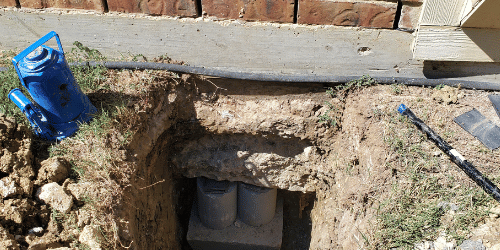
Foundation Repair That Breathes: Humidity Control Inside
A homeowner in north Dallas called after noticing a musty smell that seemed to “move” with the seasons. Their floors weren’t visibly cracking—at least not at first—but door gaps were slowly changing, and the crawl space looked damp after heavy rains. When we pulled back the access hatch, we didn’t see a single dramatic failure. We saw something more common and more dangerous: persistent humidity, condensation on structural surfaces, and soil moisture sitting under the home like a constant wet blanket.
In North Texas, that kind of moisture doesn’t just cause odor and rot. It can quietly push the soil to expand and contract, stress wood framing, and accelerate the conditions that lead to settlement and cracking. Humidity control is part of foundation repair—not a “nice-to-have.”
Quick Answer
Humidity control inside your crawl space helps stabilize the moisture environment around your foundation system. In Dallas-area homes, ongoing crawl space dampness can contribute to soil movement, wood deterioration, and concrete deterioration over time. The most effective approach usually combines (1) drainage correction outside, (2) crawl space structural repair when needed, and (3) professional crawl space encapsulation with a properly installed vapor barrier and humidity management.
What We Commonly See in North Texas Homes
During inspections, we often find that homeowners focus on the visible symptoms—cracks in drywall, sticking doors, or minor shifts in tile—while the real driver is trapped moisture below the home.
Here are the patterns we see repeatedly in Dallas and surrounding North Texas neighborhoods:
- Condensation on cool surfaces: When humid outdoor air meets cooler crawl space surfaces, moisture condenses. The crawl space never fully “dries,” even after rain stops.
- Damp subsoil and standing water: Moisture migrates upward through soil. A vapor barrier isn’t always installed correctly (or at all), so humidity has a clear path into the crawl space.
- Corroding fasteners and degraded wood: Even if you don’t see active rot yet, elevated humidity accelerates deterioration of rim joists, posts, and floor system components.
- Localized settlement that looks “mysterious”: Some areas of the home show more movement because moisture is uneven—causing uneven soil expansion beneath the footprint.
A Real-World Scenario: When “It’s Just Damp” Becomes Structural
In one anonymized repair case, a homeowner near Plano reported small hairline cracking near a window and slight floor unevenness in a hallway. The crawl space didn’t look flooded—no obvious standing water—so the initial assumption was “settling.”
During the inspection, we found:
- a soil surface without a full vapor barrier coverage
- areas where the barrier had gaps at penetrations (pipes and vents)
- a drainage discharge point that didn’t carry water away from the crawl space perimeter
- high humidity readings that stayed elevated long after rain
Once we corrected drainage and installed a properly detailed crawl space encapsulation system, the crawl space conditions stabilized. The homeowner also received targeted structural foundation repair where support was compromised—not broad “cosmetic” patchwork.
The key takeaway: humidity was feeding the cycle. The movement didn’t start because of one crack—it continued because the moisture conditions never truly improved.
Why Some Structural Repairs Fail Early
A foundation repair can “work” mechanically and still fail to solve the underlying cause if moisture continues to feed soil movement and material deterioration.
From our experience, early failures usually come down to one of these issues:
- Repairs addressed movement but not the moisture trigger
Stabilizing piers or braces may stop active settlement, but if the soil remains repeatedly saturated and then dries and shrinks, movement can return—sometimes differently than before.
- Encapsulation installed without proper detailing
A vapor barrier that isn’t sealed at seams and penetrations can allow humidity to bypass the system. You end up paying for a barrier that doesn’t fully control vapor transport.
- Drainage remains unchanged
If water continues to flow toward the foundation and crawl space perimeter, encapsulation alone can’t compensate for constant wetting of the surrounding soil.
Industry guidance consistently emphasizes that crawl space moisture control is about managing vapor and water entry—not merely covering the ground. For example, the American Society of Heating, Refrigerating and Air-Conditioning Engineers (ASHRAE) highlights moisture management as essential to building durability and indoor air quality outcomes when moisture sources are present. The U.S. Environmental Protection Agency (EPA) also discusses moisture as a driver of building material degradation and indoor air problems.
Mistakes That Make Foundation Problems Worse
Homeowners often make practical decisions that unintentionally keep the moisture cycle going. Here are the common mistakes we see in the field:
1) Treating condensation like a one-day problem
Opening vents in humid weather or running “air out” strategies can increase humidity inside the crawl space and worsen condensation cycles.
2) Masking odors without fixing the source
Deodorizers and surface treatments can reduce smell temporarily, but they don’t stop vapor movement from soil.
3) Relying on patch repairs after drywall cracks appear
Cracks can be a symptom of moisture-driven movement. If the moisture problem remains, cracks often reappear—sometimes in different locations.
4) Installing a vapor barrier without addressing water management
A barrier can control vapor, but if water is actively pooling or moving toward the foundation perimeter, you still get moisture loading around the structure.
5) Forgetting the “weak points” at penetrations
Pipes, vents, and utility runs create pathways where vapor bypasses the barrier unless they’re properly sealed and detailed.
Crawl Space Moisture Checklist (Use Before You Call a Pro)
This isn’t a substitute for a structural inspection, but it helps you spot whether humidity control is likely a root contributor.
Quick observations for homeowners
- Musty odor that returns quickly after rain
- Visible condensation on ductwork, plumbing, or support posts
- Soil that looks dark, damp, or muddy after dry weather (not just during storms)
- Evidence of mold staining or a “damp base layer” on surfaces
- Rust on metal connectors or fasteners
- Standing water stains or water tracks along the perimeter
Prevention-focused checks
- Yard drainage slopes away from the home (not toward it)
- Downspouts discharge far enough from the foundation
- Gutters are maintained and not overflowing
- Landscaping isn’t trapping water against foundation walls
If several items apply, it’s a strong signal that humidity control and moisture management should be part of your foundation repair plan.
Inspection & Prevention: What a Proper “Breathing” Repair Includes
When we design a moisture-focused foundation repair strategy, we treat the crawl space and foundation as one system. That means we don’t stop at reading a crack—our goal is to reduce the drivers of movement and material stress.
Step-by-step approach we commonly use
1. Moisture and drainage assessment
- We evaluate how water gets to the crawl space area: surface runoff, downspouts, grading, and perimeter flow.
- We look for moisture sources that keep humidity elevated long-term.
2. Crawl space condition evaluation
- We check for condensation patterns, barrier coverage (if any), and sealing quality.
- We inspect structural components where moisture tends to concentrate (rim joists, posts, support beams).
3. Structural repair where warranted
- If there are signs of structural compromise, we address it directly—bracing, support stabilization, or targeted foundation crack repair services when concrete movement is part of the issue.
4. Encapsulation with correct detailing
- A full vapor barrier with properly sealed seams and penetrations is the foundation of humidity control.
- Depending on conditions, we coordinate moisture-control encapsulation systems that help keep humidity from cycling.
5. Long-term prevention planning
- We recommend maintaining drainage performance and managing yard conditions so the crawl space can stay dry between seasonal swings.
If you’re dealing with concrete foundation crack repair, for example, sealing solutions (including basement and foundation crack sealing approaches) are typically part of a broader plan. Sealing without correcting the moisture drivers can reduce symptoms while the cause continues.
Foundation Repair vs Monitoring: When Humidity Control Changes the Decision
Some cracks and minor shifts can stabilize, while others progress because the environment keeps “pushing” the structure.
Here’s a practical way to think about it:
| Situation | What it often means | Typical next step |
|---|---|---|
| Cracks are stable and humidity is controlled | Movement may have slowed | Monitor + keep moisture/drainage managed |
| Cracks change over time + crawl space humidity stays high | Moisture-driven movement risk | Inspect drainage + crawl space conditions; plan structural stabilization if needed |
| Cracks widen after storms or seasonal transitions | Soil moisture cycles are likely involved | Correct water entry + encapsulate + evaluate supports |
| Musty odor/condensation present with ongoing floor changes | Crawl space environment is likely feeding movement | Full inspection (moisture + structure) and targeted repair |
The “breathing” idea is simple: when the crawl space environment is controlled, you reduce the repeat stress that can keep a foundation system in motion.
Our Experience With Dallas Soil Conditions
Dallas-area soils—especially expansive clay—can be uniquely reactive. During drought periods, soil can shrink. After heavy rain cycles, it can expand again. That isn’t just a theoretical concern; we see it show up in real scheduling and inspection patterns.
Here’s what that means for homeowners:
- Moisture cycling is often seasonal and uneven
- Areas near poor drainage can move more than the rest of the slab or crawl footprint
- Humidity in the crawl space can amplify the problem by increasing soil moisture and sustaining condensation cycles
That’s why moisture control crawl space repair and drainage correction services often go hand-in-hand. Even strong structural foundation repair company work can’t fully compensate for ongoing water intrusion patterns.
References you can trust (moisture and building durability)
- U.S. Environmental Protection Agency (EPA): Moisture is a key factor in building material degradation and indoor air quality problems.
- ASHRAE (moisture management guidance): Highlights moisture control as critical to durability and health when moisture sources exist.
- Building science / durability principles widely referenced in residential construction: controlling vapor and water entry reduces deterioration risk over time.
(Your exact system should be designed to your home’s conditions, not just applied generically.)
Ready to Protect Your Foundation or Crawl Space?
If your home has musty odors, condensation, or crawl space dampness—and you’ve noticed cracks, shifting doors, or uneven floors—don’t assume it’s “just settling.” In North Texas, humidity control can be the difference between a one-time repair and a long-term structural stabilization outcome.
A professional inspection helps connect the dots between drainage, crawl space moisture, and foundation movement, so you can fix the right cause—not just the visible symptom.
Helpful Next Steps (Explore Related Services)
- crawl space ventilation solutions
- foundation repair services
- drainage improvement services
- retaining wall installation services
- sloping floor foundation repair
Quick FAQ
Can crawl space humidity really affect foundation movement?
Yes. When humidity stays elevated, it can keep surrounding soil moist and contribute to expansion and contraction cycles—especially with expansive clay soils common in North Texas. That moisture-driven soil movement can stress supports and contribute to cracking or uneven floors over time.
What’s the difference between crawl space ventilation and encapsulation?
Ventilation is about exchanging air; encapsulation is about controlling vapor movement with a full vapor barrier and properly detailed system components. In many high-humidity situations, a well-designed encapsulation strategy performs better because it reduces the source path for moisture rather than relying on airflow alone.
Do I need structural foundation crack repair services if I’m mainly dealing with moisture?
Sometimes. Moisture control can reduce ongoing stress, but if there’s measurable movement or structural compromise, sealing alone won’t restore stability. A thorough inspection determines whether you need basement and foundation crack sealing, targeted crack repair, or structural stabilization first.
How do I know whether drainage correction should come before encapsulation?
If water is actively flowing toward the foundation or pooling near the perimeter, drainage correction is usually the priority. Encapsulation helps control vapor, but it can’t prevent the soil from being repeatedly wetted by surface runoff. In most successful systems, drainage correction and moisture control work together.
About Elite Foundation Repairs
About Elite Foundation Repairs
Elite Foundation Repairs provides foundation repair, crawl space repair, retaining wall construction, drainage correction, and structural stabilization services throughout Dallas, TX and surrounding North Texas communities. The company focuses on long-term structural solutions, moisture management, accurate inspections, and helping homeowners protect their properties from foundation movement driven by regional soil and drainage conditions.
