Across North Texas, hairline foundation cracks that look harmless today can turn into multi-thousand-dollar structural repairs in as little as two to three years if they are ignored. In expansive clay soils like those throughout Dallas, foundation movement of just 1 inch can multiply the stress on a slab or pier-and-beam foundation by several hundred percent, turning minor cosmetic lines into serious structural fractures. That is why the techniques used to repair foundation cracks matter just as much as how quickly you respond to them.
Foundation crack repair is not just about filling a gap so it “looks better.” True, lasting solutions require understanding why the crack formed, how the surrounding soil behaves, and whether the structure is still moving. When Elite Foundation Repairs evaluates a home in Dallas, Texas, the goal is always twofold: stop the active movement and then choose a repair method that will stay stable through years of droughts, heavy rains, and temperature swings. The right technique transforms crack repair from a temporary patch into a long-term protection plan for the entire home.
Homeowners are often surprised to learn that two cracks that look identical from the surface can require completely different repair strategies. One might be a simple shrinkage crack in a garage slab that can be sealed and monitored. Another might be the visible symptom of a sinking perimeter beam that demands deep underpinning and drainage corrections. Understanding the range of repair techniques and when each is appropriate empowers Dallas homeowners to ask smarter questions, avoid band-aid fixes, and insist on solutions designed to last.
Understanding Foundation Cracks
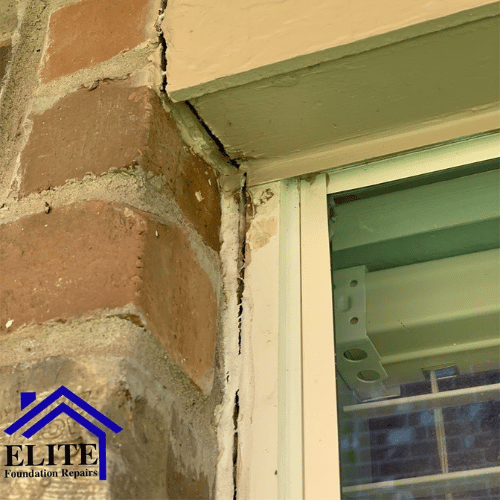
Before choosing a repair technique, it is essential to understand what kind of crack you are dealing with. Not all foundation cracks are created equal, and the shape, width, direction, and location of a crack all tell part of the story. Vertical hairline cracks in a stem wall may be common and relatively low-risk, while stepped cracks along brick mortar joints or wide diagonal cracks from window corners can signal significant foundation movement. Elite Foundation Repairs starts every project in Dallas with a thorough visual and structural assessment so that the repair is tailored to the actual cause, not just the symptom.
There are three broad categories of cracks that professionals pay close attention to: non-structural, structural, and movement-related. Non-structural cracks are often cosmetic and related to curing shrinkage or minor temperature changes in concrete. Structural cracks, on the other hand, indicate that the foundation has been overloaded or has lost support from the soil beneath it. Movement-related cracks may start small but change over time as the underlying soil expands, contracts, or erodes. Recognizing which category a crack falls into guides the choice of repair technique and the urgency of the work.
In Dallas, expansive clay soils are a major driver of movement-related cracks. These soils swell when they absorb moisture and contract when they dry out, causing foundations to heave, settle, or tilt. A crack that appears after a very wet season and widens further during a drought is often a textbook sign of soil-driven movement. That is why a truly lasting repair plan must address not just the concrete itself, but also the soil conditions, drainage patterns, and load distribution across the foundation.
Another key factor is whether the crack is active or dormant. Active cracks are still moving—opening, closing, or shifting—while dormant cracks have stabilized. Techniques like epoxy injection are best suited to dormant structural cracks, where the foundation has stopped moving and the goal is to restore strength. If the crack is still active, reinforcing the foundation with piers, improving drainage, or re-leveling the structure may be necessary before any crack-filling method can be considered lasting.
Surface Crack Sealing Methods
Surface crack sealing is often the first line of defense for minor, non-structural cracks, especially in slabs, patios, garage floors, and some interior surfaces. In these cases, the main goals are to keep water, insects, and debris from entering the crack and to improve the appearance of the surface. Dallas homeowners frequently see hairline cracks appear after new construction or after a particularly dry season, and while these may not threaten the structural integrity of the home, leaving them open can accelerate deterioration.
Two common surface sealing products are flexible urethane caulks and cementitious fillers. Flexible sealants are particularly valuable in North Texas climates because they can compress and stretch as the slab moves slightly with seasonal changes. A rigid patch that looks great in the spring can re-crack by winter if it cannot flex with the concrete. Elite Foundation Repairs typically cleans the crack thoroughly, removes loose material, and sometimes widens the top slightly to create a proper “reservoir” for the sealant so it can bond effectively and move with the slab.
For small shrinkage cracks in surfaces that are not heavily loaded, cement-based crack repair mortars may be used. These products can be color-matched or coated later to blend with the surrounding concrete. However, they are not ideal when there is ongoing movement or when water intrusion is a concern. In driveways, walkways, or porches that slope toward the house, even small cracks can let water funnel underneath the slab or toward the foundation, so the choice of sealing material and technique becomes more critical.
One important limitation of surface sealing is that it does not increase the structural capacity of the concrete. If the crack is caused by settlement, heaving, or loss of soil support, simply sealing the surface is a cosmetic fix. That is why Elite Foundation Repairs always evaluates whether a crack is isolated or part of a larger pattern of movement. When cracks align with sloping floors, sticking doors, or gaps at window frames, surface sealing alone is not an adequate or lasting solution.
Epoxy Injection And Structural Bonding
When a foundation crack is structural but the surrounding footing or wall is still in a generally acceptable position, epoxy injection can be a powerful technique. This method is designed to restore the tensile strength of cracked concrete by bonding the two sides of a crack back together. In effect, the epoxy turns the crack into a “glued joint” that can carry load almost as well as uncracked concrete, assuming the foundation is no longer moving.
The process begins with careful preparation. Technicians clean the crack, install injection ports along its length, and seal the surface with a temporary paste so that the epoxy will be forced deep into the crack rather than leaking out. Then, under controlled pressure, low-viscosity epoxy resin is injected into the ports, gradually filling the crack from the inside out. For Dallas homes, where seasonal temperature swings can be significant, the choice of epoxy and its curing properties must match the site conditions to ensure long-term performance.
One of the advantages of epoxy injection is that it can be performed from the interior in many cases, minimizing excavation and disruption. For example, a cracked interior beam or a foundation wall in a crawl space can often be repaired from inside the structure. Once cured, the epoxy-repaired section can regain much of its original strength. This makes epoxy injection especially useful in cases where the crack is narrow but deep, and where replacement of the entire section would be far more invasive and expensive.
However, epoxy injection has limitations that must be respected. It is not suitable for cracks that are actively leaking water unless the leak is controlled first, and it is not appropriate where ongoing movement is expected. If the soil beneath a Dallas slab is still settling or if drainage problems are causing cyclical heaving, the epoxy bond can re-crack or be stressed beyond its capacity. For that reason, Elite Foundation Repairs often combines epoxy injection with underpinning, drainage improvements, or soil stabilization to ensure that the repaired crack remains stable for the long term.
Underpinning With Piers
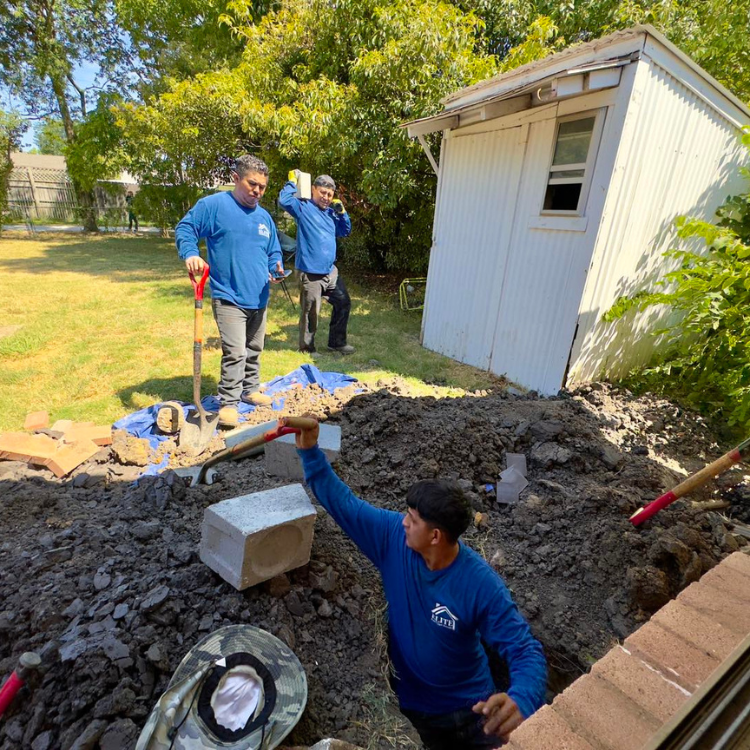
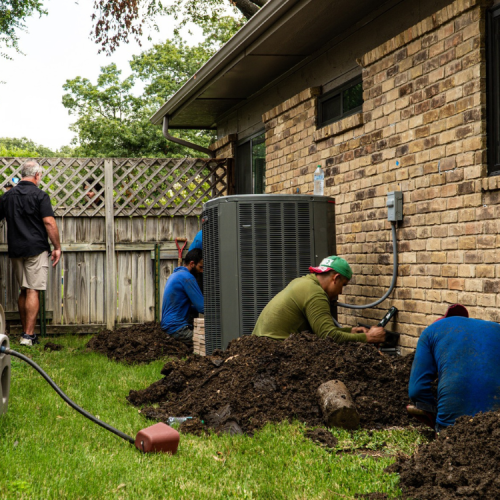
When cracks are the visible sign of a sinking or heaving foundation, underpinning with piers is often the most reliable path to a lasting solution. Underpinning does not simply fix the crack; it addresses the root problem by transferring the weight of the structure from unstable surface soils to deeper, more stable layers. In Dallas, Texas, where expansive clay can swell and shrink dramatically with moisture changes, underpinning is frequently the difference between repeated cosmetic repairs and a one-time structural correction.
Two commonly used pier systems in the Dallas area are steel push piers and helical piers. Steel push piers are driven hydraulically down to bedrock or a load-bearing stratum, using the weight of the structure itself as resistance. Helical piers, which look like large steel screws, are twisted into the ground until they reach a specified torque that indicates adequate load-bearing capacity. Once in place, both types of piers are connected to the foundation with brackets, and hydraulic jacks are used to lift and level the structure where possible.
By stabilizing the foundation with piers, the upward or downward movement that created the cracks can be significantly reduced or eliminated. This means that any subsequent crack repairs—whether epoxy injection, patching, or masonry work—are far more likely to last. Elite Foundation Repairs carefully maps the location of cracks, floor elevations, and exterior signs like brick separation to determine where piers should be placed. The objective is not just to lift, but to create a uniform, stable support system that works with the soil conditions rather than fighting them.
Homeowners sometimes ask whether underpinning is “overkill” for their situation. The answer depends on the pattern and severity of the cracks and whether there is measurable differential settlement across the home. If doors are sticking, floors are sloping, and cracks are widening or appearing in multiple rooms, surface-level repairs will not hold up. Underpinning is an investment, but in many Dallas homes, it is the only way to stop the cycle of recurring cracks and cosmetic patch jobs that never quite solve the underlying problem.
Soil, Drainage, And Prevention
Even the best crack repair technique can be undermined if the soil and drainage conditions around a home are not properly managed. In North Texas, the combination of clay soils and intense weather swings makes moisture control critical. Poor grading, clogged gutters, and leaking sprinkler systems can all contribute to uneven moisture levels around a foundation, which in turn cause uneven movement and cracking. Elite Foundation Repairs routinely includes drainage assessments as part of a comprehensive foundation repair plan in Dallas.
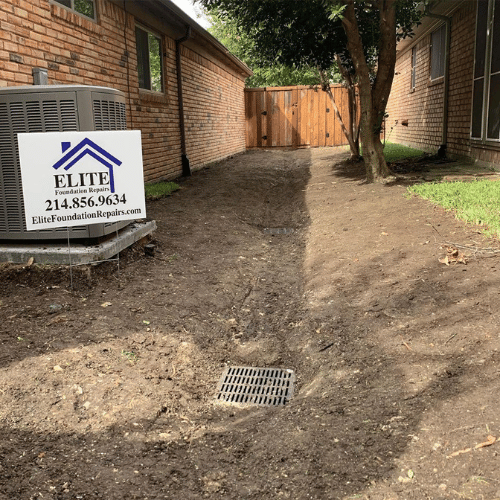
Proper grading ensures that water flows away from the foundation rather than pooling against it. Ideally, the soil should slope away from the home by at least several inches over the first few feet. Where natural grading is not sufficient, French drains, surface drains, or swales may be installed to intercept and redirect water. These systems help keep the soil moisture more consistent, reducing the expansion and contraction that lead to foundation stress. Addressing drainage can be just as important as installing piers or injecting epoxy when the goal is a lasting solution.
Another often overlooked factor is how landscaping and irrigation affect soil moisture. Large trees planted too close to the foundation can draw moisture unevenly from the soil, causing one side of the home to settle more than the other. Overwatering flower beds against the house can create localized swelling of clay soils. Elite Foundation Repairs frequently advises Dallas homeowners to adjust sprinkler zones, relocate thirsty plants, and install root barriers where appropriate. These preventive steps help protect both repaired and unrepaired portions of the foundation.
Preventive maintenance also includes regular monitoring of cracks and interior conditions. Taking dated photos of cracks, checking door and window operation seasonally, and watching for new separations in trim or tile can provide early warning of renewed movement. When paired with professional evaluations every few years, especially after extreme weather cycles, this monitoring allows small issues to be addressed before they become major structural problems. Prevention does not eliminate the need for repair, but it greatly improves the odds that repairs will last.
Choosing The Right Repair Partner
Because foundation crack repair involves both visible and hidden conditions, choosing a knowledgeable, local repair partner is crucial. In Dallas, experience with expansive clay, regional construction practices, and local building codes makes a significant difference in the quality and durability of repairs. Elite Foundation Repairs brings that regional expertise to every project, from modest crack sealing jobs to full-scale underpinning and structural restoration.
A trustworthy foundation contractor will start with a detailed inspection, including elevation readings, interior and exterior observations, and a review of the home’s history and drainage patterns. They should be able to explain, in plain language, why cracks have formed and what each recommended technique is designed to accomplish. Homeowners should expect a clear distinction between cosmetic options and structural solutions, as well as an honest discussion of what is necessary for long-term stability versus short-term appearance.
It is also important to recognize that not every crack requires the most aggressive or expensive repair method. A good contractor will tailor the solution to the problem, sometimes recommending monitoring or simple sealing for minor, stable cracks. At other times, they may recommend a combination of methods—such as underpinning with piers, epoxy injection, and drainage improvements—to ensure that repairs are not just “patched” but fully supported. The key is a comprehensive approach that looks beyond the crack line itself.
For Dallas homeowners concerned about sloping floors, cracked walls, or doors that do not close properly, a professional evaluation is the first step. Elite Foundation Repairs offers solutions that address both the symptoms and the causes of foundation issues, helping protect the value and safety of your home. To learn more about structural stabilization options that complement crack repair, visit Elite’s page on Foundation Repair.
Frequently Asked Questions
How do I know if a foundation crack is serious? The seriousness of a foundation crack depends on its width, direction, and whether it is changing over time. Hairline vertical cracks that do not widen and are limited to one small area may be non-structural, especially if they appeared shortly after construction. Wider cracks, diagonal cracks extending from window or door corners, and stepped cracks in brick or block walls are more concerning, particularly if they are associated with sloping floors, sticking doors, or gaps between walls and ceilings. In Dallas, where soil movement is common, any crack that grows, reopens after being patched, or is accompanied by other structural symptoms should be evaluated by a professional like Elite Foundation Repairs.
Can I just fill foundation cracks with store-bought products? For small, isolated, non-structural cracks, store-bought crack fillers or sealants can sometimes provide a short-term cosmetic improvement. However, they do not address underlying soil movement or structural issues. Many over-the-counter products are not designed for the expansive clay conditions found in Dallas and may fail quickly when the slab moves seasonally. If a crack is wider than a hairline, appears in multiple locations, or coincides with other signs of foundation movement, relying solely on DIY products can mask a growing problem. A professional assessment ensures that you are not simply covering up a symptom while the cause worsens.
Is epoxy injection a permanent fix for foundation cracks? Epoxy injection can provide a long-lasting, structural repair when used in the right circumstances. It is most effective for dormant cracks in concrete that has stopped moving and where the surrounding foundation is properly supported. The epoxy bonds the crack faces together, restoring much of the original strength. However, if the soil beneath the foundation continues to settle or heave, new cracks can form or the repaired crack can be stressed again. In Dallas, Elite Foundation Repairs often combines epoxy injection with underpinning or drainage improvements to stabilize the foundation first, increasing the likelihood that the epoxy repair will be durable over the long term.
How long does foundation crack repair typically take? The timeline depends on the scope and type of repair. Simple surface sealing of minor cracks might be completed in a few hours. Epoxy injection projects can take a day or more, as they involve preparation, injection, and curing time. Underpinning with piers, often necessary for homes with significant settlement and widespread cracking, can take several days to a couple of weeks, depending on the number of piers and site conditions. Elite Foundation Repairs provides Dallas homeowners with a clear schedule before work begins, explaining which areas will be affected and how long each phase will last so that families can plan accordingly.
What can I do to prevent new foundation cracks from forming? Prevention focuses on controlling soil moisture and managing loads on the foundation. In the Dallas area, keeping consistent moisture levels around the home is crucial: ensure proper grading away from the foundation, maintain gutters and downspouts, and avoid overwatering landscaping near the slab. Consider installing drainage systems if water tends to pool near the house. Be cautious with large trees planted close to the foundation, as their roots can draw moisture unevenly; root barriers or strategic planting distances can help. Regular inspections, both by the homeowner and periodically by professionals like Elite Foundation Repairs, allow small issues to be identified early and addressed before they lead to significant cracking or structural movement.