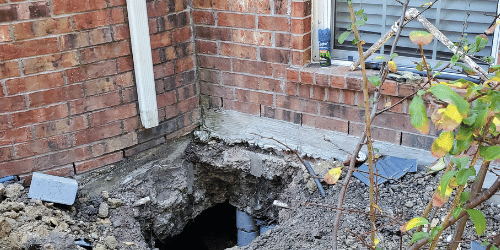
Across the United States, retaining wall failures cause millions of dollars in damage each year, and engineers estimate that a large percentage of those failures come down to one thing: the wrong wall in the wrong soil. Many homeowners assume a retaining wall is basically a decorative barrier, but in reality, it is a small engineering structure that has to quietly resist tons of lateral pressure day after day. When that structure is poorly designed, under‑built, or mismatched to the site conditions, the result can be leaning walls, cracked foundations, flooded yards, and even structural damage to the home.
In the Dallas, Texas area, choosing the right retaining wall is even more critical because of our expansive clay soils and weather extremes. North Texas clay swells when it’s wet and shrinks when it’s dry, constantly shifting and pushing on anything that tries to hold it in place. A wall that might work fine in a sandy or stable soil region can fail quickly here if it is not designed and installed correctly. That is why companies like Elite Foundation Repairs treat retaining walls as part of the overall stability of the property, not just a landscaping feature.
If you are thinking about installing a new retaining wall or worried about an existing one that is leaning, bowing, or cracking, the choice you make now will directly affect the long‑term stability of your home and yard. Understanding how retaining walls work, what types are available, and how local soil and drainage conditions affect them will help you make an informed decision and avoid expensive repairs later.
Why Retaining Walls Matter
Retaining walls are designed to do one primary job: hold back soil that would otherwise move downhill. That sounds simple, but the forces involved are surprisingly complex. Soil is heavy, and when it becomes saturated with water, it gets even heavier and exerts far more pressure on anything containing it. A properly designed retaining wall has to account for this lateral pressure, water buildup, and the movement of the soil behind it, all while remaining stable and safe.
In Dallas, many lots are not perfectly flat. Builders cut into slopes to create building pads, driveways, and patios, then rely on retaining walls to hold the soil in place. If those walls are undersized or built without proper drainage, they can start to lean outward or crack. Once that happens, the wall is no longer just a cosmetic issue; it becomes a potential safety risk and a threat to nearby foundations, sidewalks, and driveways.
Retaining walls also play a major role in managing drainage across a property. When they are designed correctly, they help direct water away from the house and toward safe discharge areas. When they are designed poorly, they can trap water against the wall and the foundation, increasing the risk of settlement, heaving, and erosion. Elite Foundation Repairs often sees retaining wall problems tied directly to improper drainage, which is why wall design and water management are always considered together.
Understanding Dallas Soil And Slope
Before choosing a retaining wall type, it is important to understand what you are asking that wall to resist. In Dallas and much of North Texas, the dominant soil type is expansive clay. This soil behaves differently than non‑expansive soils: it swells significantly when it absorbs water and shrinks and cracks when it dries out. That constant swelling and shrinking creates strong horizontal and vertical forces that act on foundations and retaining walls alike.
On a sloped property, gravity is already trying to pull soil downhill. When clay gets saturated after a heavy rain, it becomes both heavier and more slippery, increasing the pressure pushing against the wall. During hot, dry periods, the same clay can contract and pull away, then swell again with the next rain, cycling stress into the wall structure. A retaining wall in Dallas must be robust enough to survive this repeated loading without shifting or failing.
Slope angle and wall height also matter. A gentle slope with a low wall might not require the same design strength as a steep slope where the wall is holding back several feet of earth. The higher the wall, the more complex the design needs to be, and the more important it is to consider reinforcement, drainage, and proper footing. Elite Foundation Repairs evaluates not only the current slope but also how water flows across the property, since poor grading can send runoff directly into the back of a wall, accelerating deterioration.
Common Retaining Wall Types
There is no single “best” retaining wall type for every situation. Instead, there are several major categories, each with strengths and limitations. Understanding how these different systems work will help you match the wall to your specific site conditions in the Dallas area.
Gravity walls rely primarily on their own weight to resist the pressure of the soil. These are often built from large blocks, stone, or concrete and are generally used for shorter walls. For a gravity wall to be stable, it must be wide and heavy enough at the base to counteract the soil’s tendency to push it over. In our clay soils, gravity walls must be installed on properly prepared, compacted subgrade, and they still require good drainage behind them to avoid water pressure buildup.
Reinforced or cantilevered walls use steel reinforcement and a footing that extends back into the soil to resist loads. These are typically cast‑in‑place concrete or reinforced masonry walls. The footing acts like a lever arm, and the steel reinforcement ties the wall and footing together, allowing the structure to resist higher loads and taller wall heights than a simple gravity wall. For taller walls near homes or driveways in Dallas, a reinforced wall design is often the safer, more durable choice.
Segmental retaining wall systems, made from interlocking concrete blocks, are popular for residential applications because they are attractive and modular. These walls can function as gravity walls for short heights or be reinforced with geogrid layers that extend back into the soil for taller applications. When properly engineered, geogrid‑reinforced segmental walls can handle significant loading. However, they are highly sensitive to correct installation, compaction, and drainage; shortcuts during construction are a common cause of later failures.
Drainage And Stability
Water is the silent enemy of retaining walls. Even a well‑built wall can fail if water is allowed to build up behind it. Hydrostatic pressure, the pressure exerted by standing water, can greatly increase the force on the wall, particularly after heavy storms that are common in the Dallas area. That is why any stable wall design must include a strategy for collecting and redirecting water away from the structure.
A typical retaining wall drainage system might include a gravel backfill layer directly behind the wall, perforated drain pipe at the base, and weep holes or outlets that allow water to escape. The gravel allows water to move quickly down to the drain pipe instead of soaking into the soil and building pressure. The pipe then carries that water to a safe discharge point away from the wall and the home’s foundation. Without this system, water can become trapped and create forces that even a reinforced wall was not designed to handle.
Surface drainage is just as important. If the ground above the wall slopes toward the wall instead of away from it, runoff from rainstorms will be directed straight into the backfill, overwhelming any subsurface drainage. Elite Foundation Repairs often evaluates overall site grading and may recommend adjustments or additional measures such as swales, downspout extensions, or other Drainage Correction solutions to keep water from accumulating behind the wall and along the foundation.
In expansive Dallas clay, controlling moisture levels is also part of stability. Large swings between very wet and very dry conditions cause the soil to expand and contract dramatically. A well‑designed drainage system combined with consistent surface moisture management around the property can reduce these swings, helping both the retaining wall and the foundation remain more stable over time.
Choosing Materials For Dallas Conditions
The material you choose for your retaining wall affects not only its appearance but also its performance and lifespan in local conditions. Concrete, for instance, is strong and durable, but it must be properly reinforced and placed on a stable footing to handle clay movement. Cast‑in‑place concrete walls can be designed for high loads and precise shapes, making them a good choice near structures where exact alignment and long‑term strength are critical.
Segmental concrete block systems are widely used for residential retaining walls because they combine structural capacity with aesthetic flexibility. Different block textures, colors, and patterns can complement the home and landscaping. However, these systems are only as reliable as their design and installation. Proper compaction of each lift of backfill, correct placement of geogrid reinforcement where needed, and accurate alignment of the blocks are all essential for long‑term stability in Dallas soils.
Timber retaining walls are sometimes seen in older properties or as budget‑friendly options, but in North Texas they present more long‑term risk. Wood is susceptible to rot, insect damage, and warping, especially in areas with fluctuating moisture. Over time, this can compromise the wall’s ability to hold back soil. For homeowners focused on stability and low maintenance, Elite Foundation Repairs generally recommends more durable materials such as concrete, masonry, or engineered block systems, particularly when the wall is close to the home or supporting significant loads.
Natural stone can be an attractive choice and, when used in a properly designed system, can be very durable. However, dry‑stacked stone walls without engineering or reinforcement may not be suitable for taller heights or heavy loads in expansive clay conditions. If stone is desired for its look, it is often best used as a veneer over a structurally engineered concrete or masonry wall, combining aesthetics with reliable performance.
Working With A Foundation Specialist
Because retaining walls interact so closely with soil and water, they are not just a landscaping concern; they are part of the structural environment around your home. In Dallas, where foundation movement is already a common issue, it makes sense to involve a foundation specialist like Elite Foundation Repairs when designing, assessing, or replacing retaining walls. They can evaluate how the wall will affect and be affected by the home’s foundation, nearby slabs, and overall site drainage.
A foundation‑focused contractor will look beyond the visible wall and consider the entire load path and soil profile. That includes checking for signs of existing movement in the wall and foundation, measuring slopes, evaluating soil conditions, and identifying drainage problems that may be contributing to instability. Instead of simply rebuilding a failing wall in the same way, they can recommend design improvements that address the root causes of the problem.
For new construction or major landscaping projects, involving Elite Foundation Repairs early can help ensure that retaining walls, foundations, and drainage systems are designed as a coordinated whole. This integrated approach reduces the risk of conflicts, such as a wall that redirects water toward the house or a foundation repair that undermines an existing wall. In the long run, thoughtful planning and professional design support can save significant money by avoiding repeated repairs and premature replacements.
Frequently Asked Questions
How tall can a retaining wall be without engineering? In many residential situations, very short landscape walls under about 3 to 4 feet may not require formal engineering, but that guideline can be misleading. In Dallas clay, even a relatively low wall can be heavily loaded if the slope is steep, the soil is saturated, or structures and driveways are nearby. Once a wall approaches 4 feet in height, supports surcharge loads (like a driveway above it), or is close to a building, it is wise to have it engineered and reviewed by a specialist such as Elite Foundation Repairs to ensure long‑term stability and safety.
What are the warning signs that my retaining wall is failing? Common warning signs include leaning or tilting outward, horizontal or step‑like cracks, bulging sections, separation between wall segments, and soil or water seeping through joints. You might also notice sinking or slumping of the ground at the top of the wall or new cracks forming in nearby sidewalks, driveways, or your home’s foundation. In Dallas, these symptoms often indicate a combination of soil movement and poor drainage. Early evaluation is important, because addressing drainage and reinforcement issues early can sometimes prevent a complete rebuild.
Do retaining walls need maintenance? Yes, retaining walls are not completely maintenance‑free, especially in regions with challenging soils like North Texas. Periodic inspections are important to check for new cracks, movement, clogged weep holes, or erosion at the base. Keeping vegetation under control so roots do not displace blocks or penetrate joints is also helpful. Ensuring that downspouts, surface drains, and grading are still directing water away from the wall will maintain the effectiveness of the original drainage design. Simple maintenance steps can significantly extend the life of a well‑built wall.
Can a retaining wall problem affect my home’s foundation? A failing retaining wall can absolutely impact nearby foundations. If the wall is holding back soil uphill from the house and begins to give way, that soil can shift and change the pressure distribution around the foundation. Likewise, if the wall traps water or redirects runoff toward the home, it can increase moisture around the foundation and contribute to movement or settlement. Elite Foundation Repairs frequently evaluates both walls and foundations together in Dallas to make sure solutions for one do not create new problems for the other.
How do I choose the right contractor for a retaining wall in Dallas? Look for a contractor who understands both structural design and local soil conditions, not just someone who installs decorative walls. Ask about their experience with expansive Dallas clay, drainage design, and walls that support driveways or sit near foundations. Request references for similar projects and make sure they are properly insured and familiar with local codes. Working with a foundation‑oriented company like Elite Foundation Repairs gives you the added assurance that your retaining wall will be designed with long‑term stability and the protection of your home in mind.